Punjab Allows 16-Year-Olds to Get Motorcycle Licenses in 2025 – Complete Guide
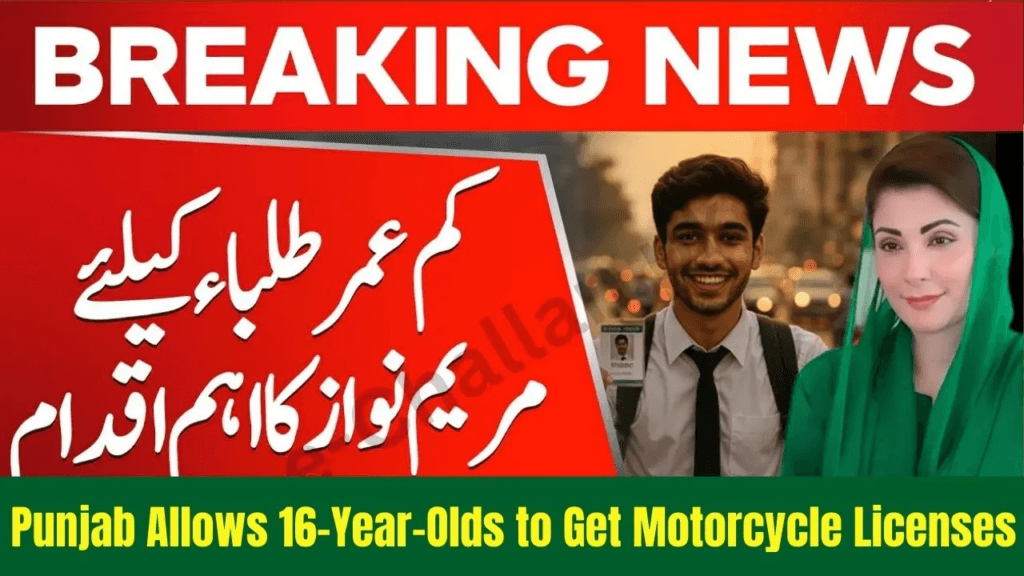
The Punjab government has officially approved the issuance of motorcycle driving licenses to 16-year-olds, marking one of the most significant reforms in Pakistan’s traffic enforcement system. Under the new policy, teenagers will now be eligible to obtain learner permits, permanent motorcycle licenses, and smart cards through the standard DLIMS process.
This announcement came after widespread public backlash over the recent province-wide traffic crackdown that resulted in thousands of challans and arrests, including students riding motorcycles without licenses or helmets.
This guide explains the new policy, reasons behind the decision, the application process for minors, helmet rules, technology monitoring, and what parents should know.
Why Did Punjab Allow Motorcycle Licenses for 16-Year-Olds?
The decision followed a strict province-wide enforcement drive that produced:
- Over 4,600 challan cases within 72 hours
- 3,100+ arrests, including many students under 18
- Viral social media clips showing minors being handcuffed
Parents, educators, and civil rights groups strongly criticized the arrests, calling them:
- Excessively harsh
- Harmful to minors’ educational and career prospects
- Potentially damaging to future employment and visa records
In response, Chief Minister Maryam Nawaz Sharif ordered an immediate revision of enforcement policy and directed authorities to legalize safe motorcycle riding for students rather than criminalizing underage riders.
New Government Policy 2025 – What Has Changed?
The revised traffic policy introduced several landmark reforms:
1. Motorcycle Licenses for 16-Year-Olds
Teenagers aged 16 years and above are now eligible to apply for:
- Learner permits
- Motorcycle driving licenses
- Smart card licenses
This applies to motorcycles within approved engine capacity limits.
2. Ending the Handcuffing of Minors
Under the new policy:
- Handcuffing of minors is banned
- Students will not receive criminal records for routine traffic violations
- Arrests will only occur in cases of serious or repeated offenses
This shift aims to protect students from unnecessary legal consequences.
3. Student Awareness Campaigns
Instead of punishments, Punjab Traffic Police will focus on education through:
- School and college road safety sessions
- Helmet usage campaigns
- Traffic law workshops
- Legal licensing guidance
The new strategy prioritizes learning over punishment.
4. Helmet Violations: Warning Before Fine
2025 introduces a historic change:
- First helmet violation → Warning only
- Repeat violations → Challan issued normally
Traffic wardens will distribute awareness slips for first-time offenders rather than imposing immediate fines.
Camera-based violations are still fined without warnings.
5. Drone & Body Camera Monitoring
To strengthen transparency:
- Drones will monitor traffic enforcement
- Body cameras will record traffic stops
- Digital documentation will be standard
This technology aims to prevent misuse and unfair treatment while documenting encounters correctly.
How Can a 16-Year-Old Apply for a Motorcycle License?
The process will follow DLIMS Punjab 2025 standards.
Step-by-Step Application Process
Step 1 – Visit DLIMS Portal
Go to:
https://dlims.punjab.gov.pk
Select “Apply for Learner Permit.”
Step 2 – Enter Applicant Details
- Name
- CNIC or B-Form number
- Mobile number
- Residential address
- Vehicle category: Motorcycle
Step 3 – Upload Documents
- CNIC or B-Form of applicant
- Parent or guardian CNIC
- Recent passport-size photograph
Step 4 – Pay License Fee
Payments accepted via:
- JazzCash
- Easypaisa
- Bank mobile apps
- 1-Link ATM
Fees will remain similar to standard learner permit rates.
Step 5 – Biometric Verification
Visit any of the following:
- Khidmat Markaz
- Driving License Issuance Centers
- Mobile licensing units
Step 6 – Receive Learner Permit
Digital or printed learner license issued instantly.
Step 7 – Road Test for Permanent License
After completing the learner period and passing the driving test:
- A smart card motorcycle license will be issued.
Why the Government Changed This Policy
The Chief Minister explained three reasons behind the reform:
1. Protecting Students’ Futures
Arrests were creating unnecessary records that could affect:
- University admissions
- Scholarships
- Employment opportunities
- Visa processing
2. Legalizing Motorcycle Riding
Since most teenagers already ride motorcycles:
- Licensing promotes legality
- Reduces unlicensed riding
- Improves rider accountability
- Lowers conflict with police
- Helps reduce accident rates
3. Improving Safety Education
Authorities observed that:
- Students lack formal traffic safety training
- Many parents ignore helmet rules
- Schools rarely teach road safety awareness
The new approach emphasizes education over punishment.
Parents’ Responsibilities Under the 2025 Law
The updated policy places shared responsibility on families:
- Teach traffic rules to minors
- Ensure helmets are worn
- Verify valid documentation
- Prevent risky riding behavior
- Disallow double riding without helmets
Parents are recognized as critical partners in youth road safety.
Impact on Punjab’s Traffic System
Positive Outcomes Expected:
- Improved compliance by young riders
- Fewer arrests of minors
- Legal documentation growth
- Reduced accident risk
- Increased public trust in enforcement
Implementation Challenges:
- Ensuring helmet compliance
- Controlling underage misuse
- Maintaining strict enforcement without harassment
FAQs – Motorcycle Licenses for 16-Year-Olds
Can any 16-year-old apply for a license?
Yes, after document verification and biometric clearance.
What engine capacity is allowed?
Initial limits are expected to remain within 70cc to 100cc motorcycles.
Do fines still apply to minors?
Yes. Only first helmet offenses receive a warning. Repeat violations are fined.
Will minors still be arrested?
Handcuffing and casual arrests are banned. Serious or repeat offenses may lead to legal action.
Is the smart card mandatory?
Yes, all permanent licenses will be issued as smart cards.
When does implementation begin?
Rollout has already started, with full province-wide implementation expected within days.
Conclusion
Punjab’s decision to allow 16-year-olds to obtain motorcycle licenses represents a major shift toward education-based enforcement and safer mobility.
Rather than criminalizing young riders, the new policy emphasizes:
- Legal riding
- Helmet compliance
- Safety awareness
- Transparent monitoring
With drone surveillance, body cameras, awareness campaigns, and simplified licensing, 2025 introduces an enforcement model that balances safety, compassion, and accountability.
This reform is expected to reduce arrests, improve rider behavior, and create safer roads across Punjab.