How Traffic Cameras Issue an E-Challan in Pakistan – Safe City Full Process Explained
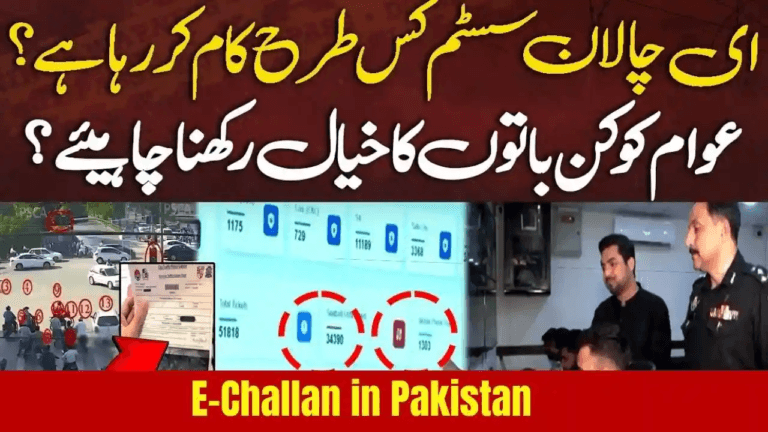
Across Pakistan, traffic enforcement has shifted almost entirely to camera-based e-challans. In major cities of Punjab (PSCA), Sindh / Karachi, and Islamabad (ITP), violations are now detected, recorded, and fined without stopping vehicles on the road. The entire workflow is powered by AI surveillance systems, ANPR cameras, and centralized Safe City control rooms — and the whole process typically completes within seconds.
Below is a clear, step-by-step explanation of exactly how traffic cameras issue an e-challan in Pakistan in 2025.

1. How Safe City Cameras Detect Violations
High-definition Smart Traffic Cameras are installed at:
- Traffic signals and junctions
- Flyovers & underpasses
- Ring roads & highways
- Service lanes
- Commercial zones and school areas
Each camera is connected to an AI-based detection engine that continuously monitors violations, including:
- Red-signal jumping
- Overspeeding
- Lane discipline & one-way violations
- Riding without helmet
- Missing or illegal number plates
- Fancy plates
- Mobile phone usage while driving
- Stop-line crossing
- Illegal parking (in select areas)
No officer is involved at this stage — detection is purely automatic.
2. Snapshot & Timestamp Recording
Once a violation is detected, the system instantly captures:
- Full vehicle image
- Zoomed image of the number plate
- Exact date & time of violation
- GPS location / intersection ID
- Type of offence committed
All data is immediately transmitted to the Safe City control center:
- Punjab: PSCA Central Command
- Karachi: Sindh Safe City Karachi Hub
- Islamabad: ITP Safe City Islamabad
This transmission happens within seconds of the violation.
3. Number Plate Reading – ANPR System
The captured plate image is processed by ANPR (Automatic Number Plate Recognition) AI software, which analyzes:
- Character size & spacing
- Font shape
- Plate clarity
- Legal plate format
- Vehicle category & region code
If the number plate is:
- Fancy or stylized
- Dirty or damaged
- Tilted or low-contrast
- Fake or cloned
…the system may still read it incorrectly or tag it as:
- Illegal plate challan
- Unclear / unreadable plate violation
This is the most common cause of camera-based challans across Lahore & Karachi.
4. Verification with Government Databases
Once the plate is read, Safe City servers automatically connect with:
- Excise & Taxation database
- NADRA CNIC records
- Vehicle ownership registry
- Registered mobile numbers
The system matches:
- Vehicle → Owner CNIC → Address → Mobile Number
No manual processing is required. This entire lookup is automated.
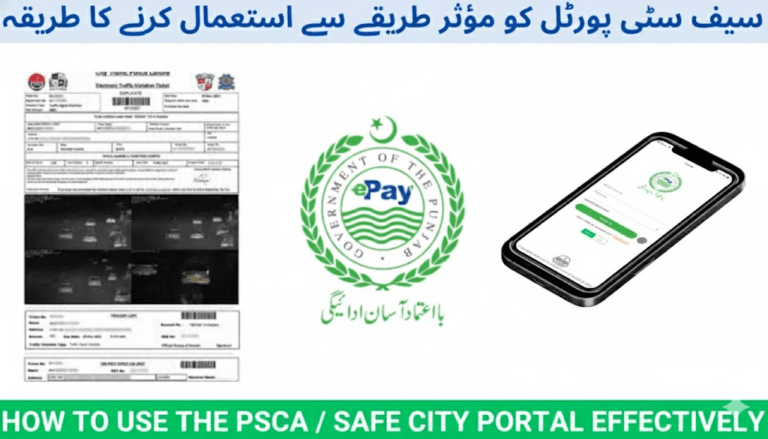
5. Digital E-Challan Generation
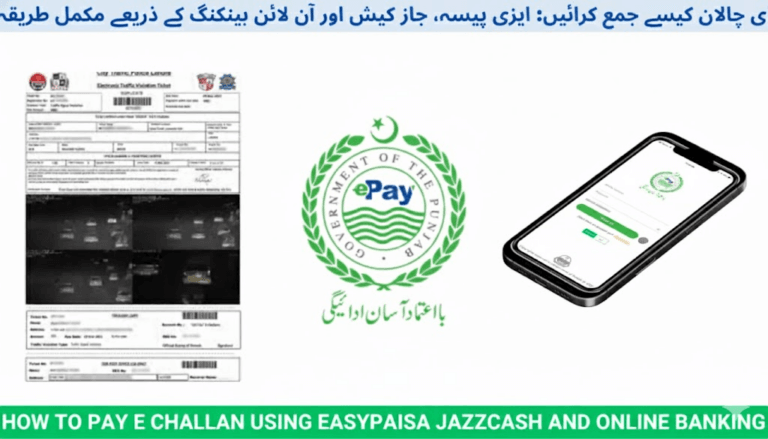
After verification, the platform instantly generates the official e-challan containing:
- Vehicle registration number
- Registered owner name
- Violation type
- Date & time of offence
- Exact location
- Fine amount
- Photographic proof (camera snapshot)
The challan is immediately uploaded to:
- Punjab: PSCA e-Challan Portal
- Karachi: Sindh Police E-Challan System
- Islamabad: ITP e-Ticketing Portal
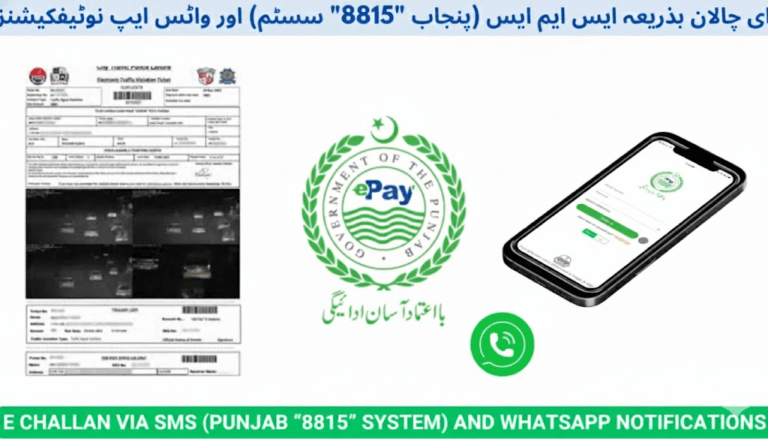
6. SMS Notification to Vehicle Owner
An SMS is automatically forwarded to the mobile number linked with the vehicle in Excise records, including:
- Challan number
- Violation details
- Fine amount
- Website link to view & pay the challan
If your mobile number in Excise records is not updated, you may not receive this SMS, even though the challan has already been issued and recorded online.
That’s why many drivers “discover” challans later during online searches, verification checks, or license renewals.
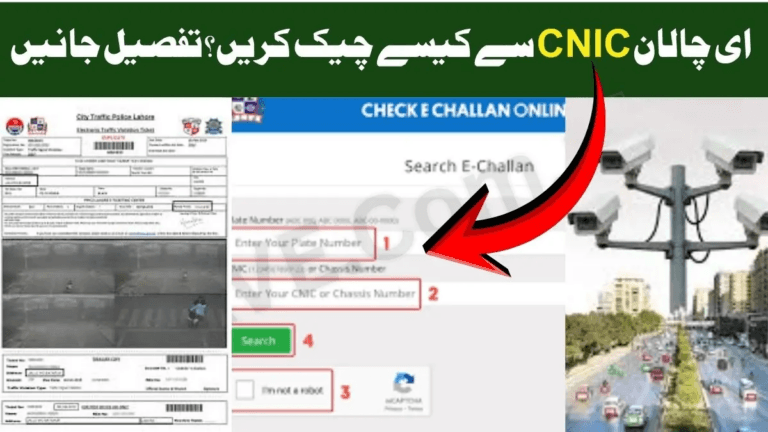
7. Online Visibility of the Challan
Once generated, the challan becomes visible immediately on provincial portals:
- Punjab: psca.gop.pk
- Sindh / Karachi: echallan.sindhpolice.gov.pk
- Islamabad: itp.gov.pk
Search using:
- Vehicle number
- CNIC (in supported regions)
Each challan displays full camera evidence.
8. Why Wrong Camera Challans Can Occur
Despite AI accuracy, some mistakes happen due to:
- Duplicate or cloned number plates
- Fancy fonts confusing ANPR recognition
- Dust or mud covering plates
- Poor lighting or glare
- Plate angle distortion
- Digit misreads (e.g., B vs 8, O vs 0)
- Manual entry errors for roadside challans
Wrong challans are most common where fancy or non-standard plates are widespread — especially in Lahore, Karachi, Rawalpindi, and Faisalabad.
Each province offers structured procedures to dispute & cancel incorrect challans via PSCA, Sindh Police dispute desks, or ITP resolution centers.
9. Why Camera E-Challans Are Rapidly Increasing
Challan volumes rose sharply in 2025 because:
- Province-wide helmet enforcement drives
- Crackdowns on unlicensed teenage riders
- More Safe City cameras installed
- Drone surveillance added in several cities
- Full automation means no violation is ignored
- ANPR tracking of fake number plates
The system records each violation 24/7, without warnings or discretion.
10. What Happens After a Challan Is Issued
Until payment or cancellation:
- Challan is linked to CNIC & vehicle record
- Vehicle may be blocked in the Excise system
- Checkpoints may stop the vehicle
- License renewal or vehicle transfer becomes restricted
Ignoring challans causes cumulative legal issues.
11. Can Helmet E-Challans Be Avoided?
Camera-issued helmet challans cannot be avoided.
AI systems automatically detect bare heads on motorcycles and issue fines without roadside stops.
Only physical police checking in Punjab allows limited discretion:
- First-time offenders stopped manually may receive a warning, but
- Camera detections always generate fines — no warnings, no waivers.
Best prevention: Always wear a certified helmet.
12. Future of Traffic Enforcement in Pakistan
Road safety enforcement is moving rapidly toward:
- Fully drone-based challan issuance
- Real-time mobile app notifications
- City-wide integration of PSCA, Sindh Safe City & ITP systems
- QR-code digital license & challan tracking
- AI predictive enforcement systems
Manual challans are gradually being phased out.
Final Summary
Traffic cameras in Pakistan now use a fully automated digital enforcement process:
- Violation detected by AI camera
- Plate read using ANPR
- Snapshots + timestamps recorded
- Database verification with Excise & NADRA
- E-challan generated instantly
- SMS sent to registered owner
- Challan published online for viewing & payment
No human intervention is required at any point.
As Safe City coverage expands across Punjab, Sindh and Islamabad, camera-issued challans will only increase. The best protection for all drivers remains full compliance with traffic rules — especially helmet use, standard plates, lane discipline, and valid licenses.
Understanding the system means avoiding fines and staying legally protected while driving in Pakistan.